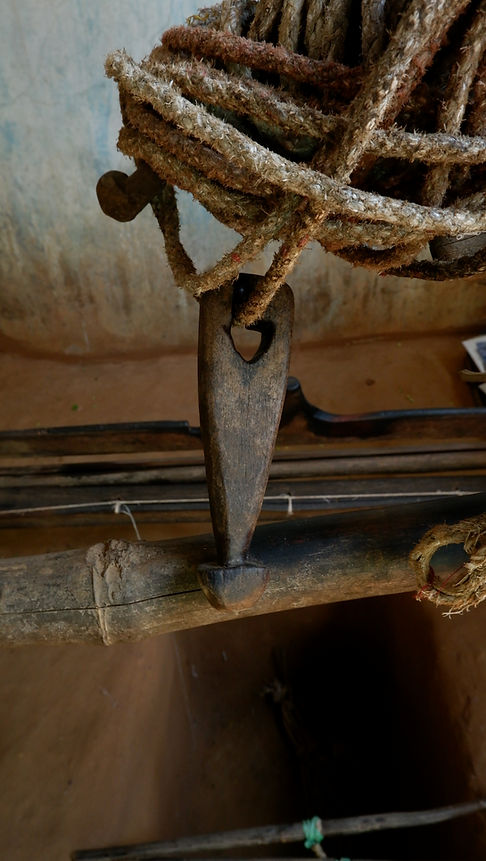
A visual excerpt from a craft documentation project, this series of photographs journeys through textiles made by the Panka community in favour of tribal communities of Bastar and Kotpad. Tracing back at the iconography of the motifs woven onto these textiles, there is a familiarity through exchange of forest goods extracted by tribals bartered with textiles woven for them by the Panka community. A specific type of Pata is woven for different occasions to be worn, gifted or offered, and the way it is draped, tightened or layered shifts along. Shared stories around fires and under trees, beside running streams of water and spotting animals that become entities of worship, become the center point of motifs. The textile is made using kora cotton at large with borders of deep earthy red that comes from aal roots. A dyeing practice prevailing among the women of the Panka community across generations in the village of Kotpad involves a tedious set of steps in achieving the earth red on kora. The men of the region then weave on household pit looms in Kotpad and the neighbouring village of Bastar. Over time, the craft contemporised to travel beyond tribal communities that once draped it, altering the touch and feel to finer counts of yarns that meet urban wearers in the present day. Besides, due to the rise in synthetic alternatives for faster production, the aal derived red is on the brim of vanishing given the present day legalities around the root that was once extracted by the tribals themselves in quantities that sufficed their communities.
This set of images begins with the maker and ends with the wearer, in their origin, as it came to being.
Tribal textiles of Kotpad in Orissa bordering with Bastar in Chattisgarh, India.